
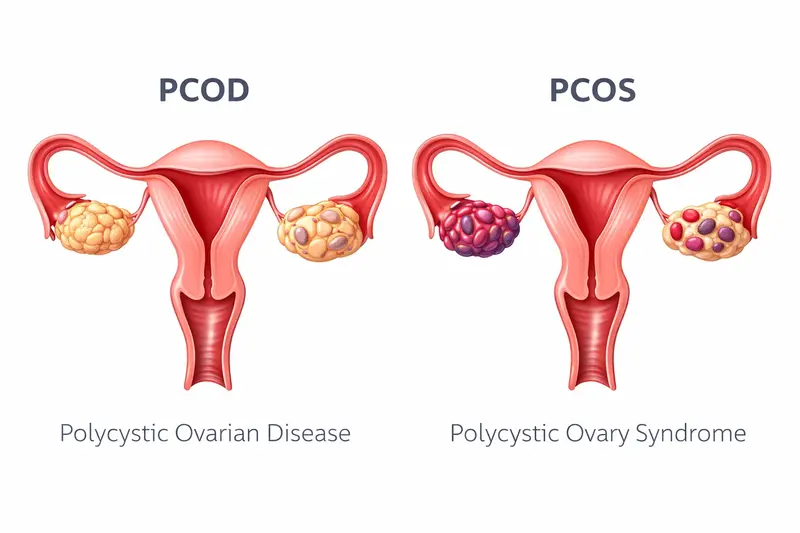
Globally, medical data suggests that nearly 20–25% of women of reproductive age show features of hormonal imbalance, yet only a fraction receive a clear diagnosis. In India, PCOS and PCOD are now being identified in teenagers, working professionals, and even women nearing menopause. Despite this, confusion around these two terms remains widespread.
Here is what makes it more concerning. Many women live with symptoms for years without knowing whether they have PCOS or PCOD. Even today, the terms are often used interchangeably in clinics, reports, and online content.
If you are trying to understand the Difference between PCOS and PCOD, this explanation is meant to slow things down and give you clarity, not overwhelm you with definitions.
Why Most Women Leave the Gynae Clinic in Delhi Confused after knwoning about PCOS or PCOD
You might have been told, “It’s PCOD, nothing serious,” or “You have PCOS, control your lifestyle.” These statements sound reassuring, but they leave out important context.
PCOD and PCOS sit on the same spectrum, but they are not identical conditions. One is largely functional and reversible. The other involves deeper hormonal and metabolic changes.
Understanding this PCOS vs PCOD distinction changes how you approach treatment, fertility, and long-term health.
What is PCOD?
PCOD, or Polycystic Ovarian Disease, is extremely common in Indian women.
In Pcod meaning in Hindi, many doctors describe it as “ovaries ka hormonal imbalance”. Your ovaries produce eggs, but ovulation becomes irregular. Some eggs do not mature fully and may appear as small cysts on ultrasound.
What is important to understand is this:
Your ovaries are still capable of normal function.
PCOD is often linked to stress, irregular routines, sudden weight gain, insulin sensitivity, or lack of physical activity. In many cases once lifestyle patterns improve, hormone balance follows.
Think of PCOD like your body going slightly out of rhythm. The ovaries are still healthy, but their timing is disturbed. Just like sleep improves when routine improves, hormonal rhythm often returns when daily habits stabilise. That is why many women with PCOD notice improvement simply after regular exercise, better meals, and stress control.
What is PCOS?
PCOS, or Polycystic Ovary Syndrome, is more complex.
In PCOS meaning in Hindi it is often explained as “ek lambi avadhi ki hormonal aur metabolic problem.” This means the condition affects how your body handles insulin, hormones and inflammation not just ovulation.
Women with PCOS often have higher androgen levels. This leads to symptoms like facial hair, acne, scalp hair thinning and irregular or absent periods
PCOS is manageable, but it usually requires long-term care rather than short-term correction.
PCOS, however, behaves differently. It does not stay limited to the ovaries. It involves the entire hormonal network of the body. Insulin, thyroid, stress hormones, and reproductive hormones all start interacting with each other. This is why symptoms may show up not just as period problems but also skin issues, stubborn weight gain, mood swings, or fatigue. It is a systemic condition, not just a menstrual one.
PCOS vs PCOD: What Changes Practically for You.
When people ask about PCOS vs PCOD, they often want a clear verdict. But the real answer lies in impact
PCOD generally responds well to non-invasive changes. PCOS often needs medical support alongside lifestyle changes
This PCOD and PCOS difference also affects how doctors monitor you over time. PCOS may increase future risk of diabetes, cholesterol imbalance, and endometrial issues. PCOD usually does not carry the same long-term risks
That is why correct identification matters.
PCOS and PCOD Symptoms: Why They Overlap and Why They Feel Different
Both conditions can disturb periods. That is where confusion begins.
- With PCOD, periods may be delayed but still occur. With PCOS, periods may disappear for months.
- Weight gain in PCOD is often manageable. In PCOS, weight gain can occur even with controlled eating.
- Skin changes, hair fall, and mood disturbances are typically more pronounced in PCOS.
How Ultrasound Reports Can Mislead You
Many women are diagnosed based on a single ultrasound showing cysts. That is not enough.
Cysts alone do not mean PCOS. Healthy ovaries can show cyst-like follicles too.
A responsible Gynaecologist in Rohini or Obs and Gynae in Rohini looks at ultrasound findings along with symptoms, blood tests, and menstrual history.
Diagnosis should never rely on imaging alone.
Blood Tests and Hormones: What Doctors Look For
To differentiate between PCOD and PCOS, doctors may assess hormone levels, including androgens, insulin markers, and thyroid function.
PCOS often shows metabolic involvement. PCOD may not.
This distinction guides whether treatment focuses more on lifestyle correction or on medical hormone regulation.
A Best gynaecologist in Delhi explains these results clearly instead of simply naming the condition.
Fertility and Pregnancy: What You Should Know Early
Fertility is one of the biggest concerns linked to both conditions.
PCOD usually does not prevent pregnancy. Many women conceive naturally once cycles become regular.
PCOS can make ovulation unpredictable. However with proper guidance, most women with PCOS do conceive sometimes with ovulation support.
The key is early planning and realistic expectations
Emotional and Mental Health: The Part Rarely Discussed.
Hormonal imbalance affects more than the body
Women with PCOS often say they are anxious, sad, can’t sleep well, and are unhappy with their weight or looks. These emotional effects are real and need to be taken seriously.
PCOD may cause short-term stress, but PCOS can hurt your confidence for a long time if you don’t deal with it with care.
A supportive Obs and Gynae Clinic in Rohini considers emotional wellbeing as part of treatment.
Clear Difference Between PCOD and PCOS
| Factor | PCOD (Polycystic Ovarian Disease) | PCOS (Polycystic Ovary Syndrome) |
| Nature of condition | Functional ovarian imbalance | Hormonal + metabolic disorder |
| Severity | Usually mild to moderate | Often long-term and complex |
| Ovulation | Irregular but still happens | Often absent or very delayed |
| Cysts | Few immature follicles | Multiple persistent follicles |
| Hormones | Slight imbalance | High androgens + insulin resistance common |
| Weight changes | Lifestyle related | Can gain weight even with controlled diet |
| Symptoms intensity | Mild to moderate | More noticeable and persistent |
| Facial hair / acne | Less common | Very common |
| Period pattern | Delayed cycles | Missed cycles for months |
| Fertility impact | Usually normal with routine correction | May need ovulation support or treatment |
| Metabolic risks | Low | Higher risk of diabetes, cholesterol issues |
| Reversibility | Often reversible with lifestyle | Manageable but not fully reversible |
| Treatment focus | Diet, exercise, cycle regulation | Hormones, insulin control, lifestyle + long follow-up |
| Long-term monitoring | Minimal | Regular medical follow-ups required |
PCOD and PCOS Treatment in Rohini Delhi
This is where many women feel let down.
PCOD treatment in Delhi often includes cycle regulation, dietary changes, and activity guidance. Many women improve within months.
PCOS treatment in Delhi may include insulin-sensitising medication, hormone regulation, skin and hair management, and long-term follow-up
Treating both conditions the same way leads to disappointment.
When to go to a Gynaecologist in Rohini Delhi
Do not wait if you notice:
• Periods missing for 3 months or more
• Sudden excessive facial hair or hair fall
• Rapid unexplained weight gain
• Severe acne after teenage years
• Difficulty conceiving after 6–12 months of trying
• Persistent pelvic discomfort
Immediately consult a good Gynaecologist in Rohini
Why Follow-Up Matters More Than the First Visit?
Hormonal health changes over time.
What starts as PCOD may stabilise completely. PCOS requires periodic reassessment to prevent long-term complications.
That is why choosing a consistent care provider matters more than chasing multiple opinions.
An experienced Obs and Gynae in Rohini builds continuity rather than offering one-time solutions.
Lifestyle Changes That Actually Make a Difference
You are often told to “lose weight” or “exercise more” without explanation.
What matters more is metabolic balance. Sleep quality, stress management, regular meals, and movement consistency are more important than extreme dieting.
PCOD responds quickly to balanced routines. PCOS responds slowly but steadily with the right plan.
Progress should be measured in months, not weeks.
Myths That Need to Be Let Go
PCOS is not a fertility sentence.
PCOD is not “nothing serious.”
Cysts do not automatically mean surgery.
Periods alone do not define health.
Understanding facts instead of myths protects you from unnecessary fear.
PCOS and PCOD are not interchangeable labels. They describe different patterns of imbalance, different risks, and different treatment paths.
Once you understand the Difference between PCOS and PCOD, you stop blaming your body and start working with it.
If you are seeking personalised guidance, Manasvi Healthcare offers thoughtful gynaecological care focused on clarity, continuity, and long-term wellbeing. A single honest consultation can often replace years of confusion.
Your body is not confused. It is responding. You just need the right guidance to listen.