Approximately 25–35% of pregnant women develop piles (hemorrhoids), with the condition occurring most commonly during the third trimester and shortly after childbirth.
Piles in women are a common condition caused by swollen veins in the lower rectum or anus. Although pregnancy and childbirth are among the most common reasons for piles in women, other factors such as chronic constipation, prolonged sitting, obesity, and a low-fibre diet can also increase the risk. Recognizing piles symptoms in women early and seeking timely medical care can help prevent complications and improve quality of life.
Whether you are experiencing piles during pregnancy, piles after postpartum, or symptoms unrelated to pregnancy, early evaluation is important. If you are looking for piles treatment for women or need expert advice from a Gynaecologist in Rohini, timely diagnosis and a personalized treatment plan can help relieve symptoms and support a faster recovery.
Why Are Piles More Common in Women?
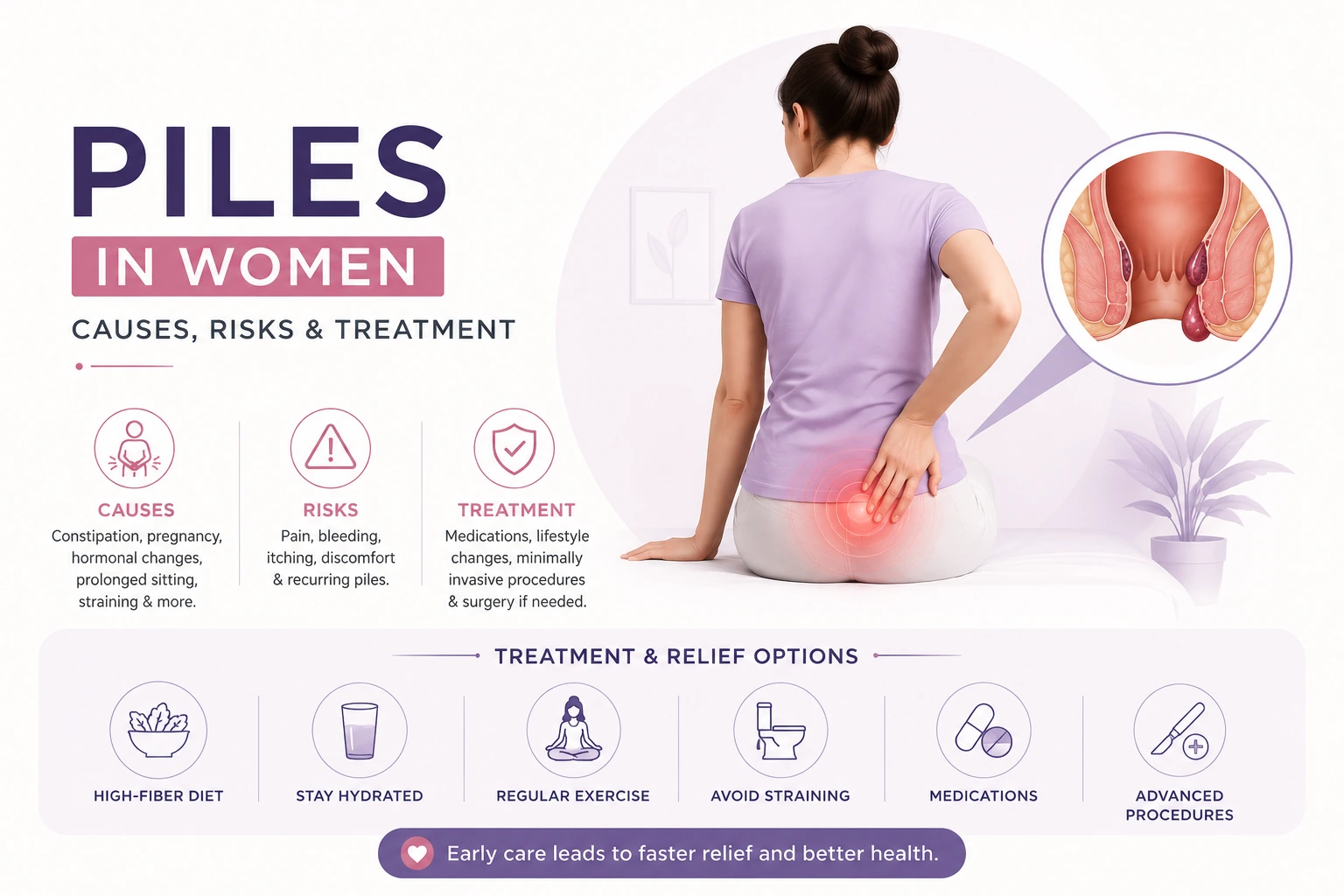
Piles in women are more common due to several physiological and lifestyle factors that increase pressure on the veins around the rectum and anus. While pregnancy is one of the leading causes, hormonal changes, childbirth, constipation, and prolonged straining during bowel movements also contribute to the development of hemorrhoids.
Common Reasons for Piles in Women
The most common causes of women’s piles include:
- Pregnancy: The growing uterus increases pressure on the pelvic veins, making piles more likely, especially during the third trimester.
- Childbirth: Vaginal delivery and prolonged pushing during labour can strain the rectal veins, leading to piles or worsening existing hemorrhoids.
- Hormonal Changes: Pregnancy hormones can relax blood vessel walls and slow bowel movements, increasing the risk of constipation and piles.
- Chronic Constipation: Frequent straining while passing stools places excessive pressure on the veins around the anus.
- Low-Fibre Diet: A diet low in fibre can lead to hard stools and difficult bowel movements.
- Obesity: Excess body weight increases pressure on the pelvic region and rectal veins.
- Prolonged Sitting: Sitting for long periods, particularly on the toilet, can increase pressure on the anal veins.
- Heavy Lifting: Repeated lifting of heavy objects may contribute to increased abdominal pressure and hemorrhoid formation.
Can Piles Be Prevented?
Although piles cannot always be prevented, the risk can be reduced by:
- Eating a fibre-rich diet with fruits, vegetables, whole grains, and legumes
- Drinking adequate water throughout the day
- Avoiding prolonged straining during bowel movements
- Staying physically active
- Avoiding sitting on the toilet for extended periods
- Managing constipation promptly, especially during pregnancy
If you notice persistent discomfort, bleeding during bowel movements, or swelling around the anus, consult an experienced Gynaecologist in Rohini or an Obs and Gynae specialist in Rohini
. Early evaluation and appropriate piles treatment for women can help relieve symptoms and prevent the condition from worsening.
Piles Symptoms in Women
The symptoms of piles in women vary depending on whether the hemorrhoids are internal or external and how severe they are. Women with piles may experience:
- Bright red bleeding during or after bowel movements
- Pain or discomfort around the anus, especially while passing stools
- Itching or irritation in the anal region
- Swelling around the anus
- A soft lump near the anal opening, which may be painful if a clot forms
- Mucus discharge after bowel movements
- A feeling of incomplete bowel emptying
- Pain while sitting, particularly with external hemorrhoids
The severity of symptoms may increase during pregnancy or after childbirth because of increased pressure on the pelvic veins and straining during delivery.
Piles Treatment for Women in Delhi
Most women with mild to moderate piles improve with conservative treatment, including a high-fibre diet, adequate fluid intake, stool softeners (when prescribed), and warm sitz baths.
Conservative Treatment for Piles
Women with mild or early-stage piles often respond well to non-surgical treatment, which may include:
- Eating a high-fibre diet rich in fruits, vegetables, whole grains, and legumes
- Drinking plenty of water to soften stools
- Avoiding prolonged straining during bowel movements
- Regular physical activity to improve bowel function
- Warm sitz baths to relieve pain and irritation
- Pregnancy-safe topical creams or ointments, if prescribed
- Stool softeners or fibre supplements when recommended by a doctor
These measures can help reduce symptoms and support healing, especially in women with piles during pregnancy or piles after postpartum.
Minimally Invasive Piles Surgery Procedures for women in Delhi
If symptoms persist despite conservative treatment, your doctor may recommend minimally invasive procedures, such as:
- Rubber Band Ligation: A small rubber band is placed around the hemorrhoid to cut off its blood supply, causing it to shrink and fall off.
- Sclerotherapy: A medicated solution is injected into the hemorrhoid to reduce its size.
- Infrared Coagulation: Heat is used to shrink small internal hemorrhoids by sealing the blood vessels.
These procedures are usually performed on an outpatient basis and typically require minimal recovery time.
Piles Surgery in Women
Piles surgery in women may be recommended for large, prolapsed, or recurrent hemorrhoids that do not improve with other treatments. Surgical options include:
- Hemorrhoidectomy: Surgical removal of large or severe hemorrhoids.
- Stapled Hemorrhoidopexy: A procedure that repositions internal hemorrhoids and reduces their blood supply.
The choice of surgery depends on the grade of the hemorrhoids, symptom severity, overall health, and whether the patient is pregnant or postpartum.
Piles in women are a common condition that can develop due to pregnancy, childbirth, chronic constipation, hormonal changes, or prolonged straining during bowel movements. Although mild symptoms often improve with lifestyle modifications and conservative treatment, persistent bleeding, severe pain, or recurrent hemorrhoids require timely medical evaluation. Early diagnosis and appropriate piles treatment for women can help relieve symptoms, prevent complications, and improve overall quality of life.
If you are looking for an experienced Gynaecologist in Rohini, Manasvi Healthcare is committed to providing evidence-based care tailored to your individual needs.
Book your consultation at Manasvi Healthcare today for expert evaluation and personalized treatment to help you manage piles comfortably and safely.