
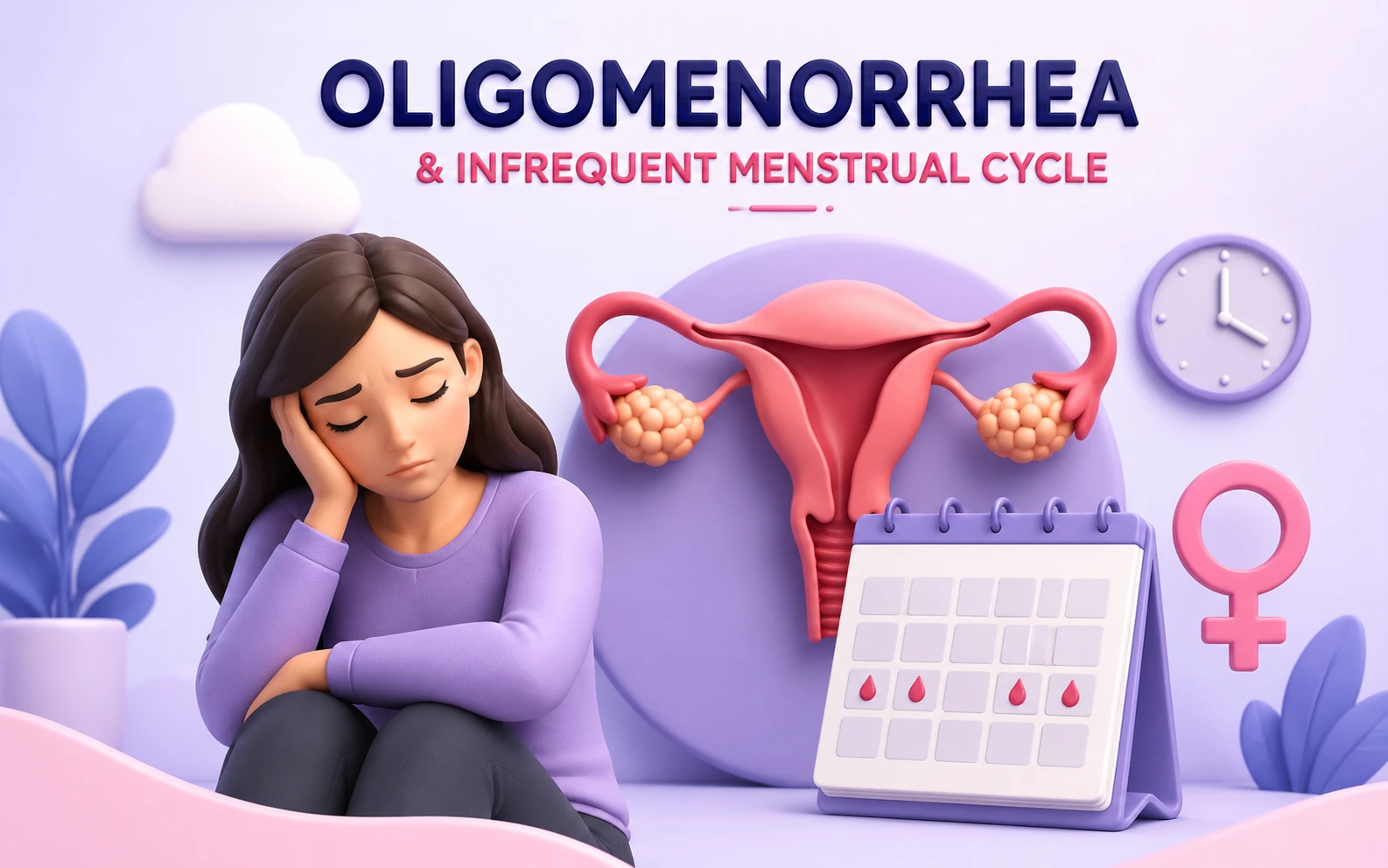
Around 35–40% of women of reproductive age experience menstrual cycle irregularities at some point in their lives, making abnormal periods one of the most common gynecological concerns worldwide as per the NCBI.
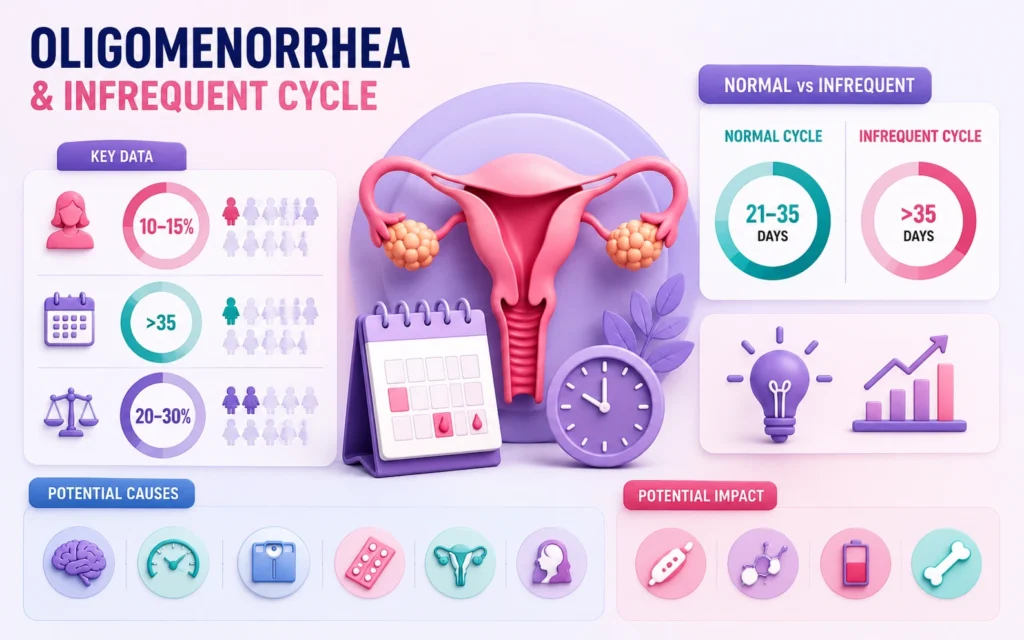
Oligomenorrhea refers to a condition where menstrual cycles become infrequent, typically occurring at intervals longer than 35–40 days. It is not a disease itself but a symptom of underlying hormonal or reproductive imbalance that affects the regularity of periods. In a normal cycle, menstruation occurs every 21 to 35 days. When cycles extend beyond this range such as a 40-day menstrual cycle or more it may indicate hormonal disruption, ovulatory dysfunction, or underlying conditions such as PCOS or thyroid imbalance.
In Delhi, delayed or irregular periods are commonly evaluated through hormonal blood tests, pelvic ultrasound, and clinical examination by gynecologist in Rohini, Delhi. Early identification of the cause is important because untreated menstrual irregularities can affect fertility, metabolic health, and long-term hormonal balance.
Oligomenorrhea Meaning and Menstrual Cycle Overview
Oligomenorrhea is a menstrual disorder in which periods occur at long intervals, resulting in fewer menstrual cycles than normal in a year. When this hormonal balance is disrupted, ovulation may become irregular or delayed, leading to longer cycle gaps such as a 40-day menstrual cycle.
Oligomenorrhea is not a standalone disease but a symptom of underlying conditions such as hormonal imbalance, polycystic ovary syndrome (PCOS), thyroid dysfunction, stress, or significant weight changes. These factors interfere with normal ovulation, causing delayed or infrequent periods. Clinically, oligomenorrhea is often identified when a woman has fewer than 6–8 menstrual cycles per year, indicating persistent irregularity in reproductive hormone function.
Do you also have Irregular menstrual Cycle issues?
Causes of Oligomenorrhea and Hormonal Imbalance
Oligomenorrhea is most commonly caused by disruption in the hormonal regulation of the menstrual cycle, especially involving estrogen, progesterone, LH, and FSH. When these hormones become imbalanced, ovulation may become delayed or inconsistent, leading to longer menstrual cycles.
Leading causes is polycystic ovary syndrome (PCOS), a condition where excess androgen levels interfere with normal ovulation, resulting in infrequent periods. PCOS is strongly linked with irregular or delayed menstrual cycles in reproductive-age women. Another major cause is thyroid dysfunction. Both hypothyroidism and hyperthyroidism can disrupt the menstrual cycle by affecting metabolic and reproductive hormone balance, leading to delayed or missed periods. National Health Portal India
Lifestyle factors also play a significant role. High stress levels, sudden weight gain or loss, excessive exercise, or poor nutrition can affect the hypothalamus, the part of the brain that regulates reproductive hormones.
In some cases, medications, chronic illnesses, or perimenopausal hormonal changes can also lead to irregular menstrual cycles.
Symptoms and Menstrual Abnormalities
Oligomenorrhea shows up as changes in the regular menstrual cycle pattern, mainly affecting the timing, flow, and predictability of periods.
1. Delayed or Missed Periods
The most common symptom is late periods or skipped cycles. In some cases, periods may stop for several months.
2. Irregular Cycle Pattern
The menstrual cycle becomes unpredictable, making it difficult to track ovulation or anticipate the next period.
3. Light or Reduced Bleeding
When menstruation does occur, the flow may be very light or shorter than usual due to inconsistent hormone levels affecting the uterine lining.
4. Hormonal Imbalance Signs
Some women may experience additional symptoms linked to hormonal disruption, such as:
- Acne or oily skin
- Excess facial or body hair growth
- Thinning scalp hair
5. Menstrual Abnormalities
These symptoms indicate that the body is not maintaining a normal ovulation cycle, often due to conditions like PCOS or thyroid imbalance.
Diagnosis Process
Oligomenorrhea is diagnosed by identifying the pattern and cause of delayed or infrequent menstrual cycles.
1. Medical History Evaluation
A doctor first reviews:
- Menstrual cycle history (cycle length and frequency)
- Sudden changes in periods
- Lifestyle factors such as stress, diet, or exercise
2. Hormonal Blood Tests
Blood tests are used to check hormone levels such as:
- Estrogen
- Progesterone
- Thyroid hormones (T3, T4, TSH)
- Androgens (male hormones)
These help identify conditions like PCOS or thyroid imbalance.
3. Pelvic Ultrasound
An ultrasound scan is used to examine:
- Ovaries for cysts (common in PCOS)
- Uterine lining thickness
- Structural abnormalities
4. Cycle Tracking
Patients are often advised to track menstrual cycles for 2–3 months to confirm irregularity patterns and ovulation delays.
5. Exclusion of Other Conditions
Doctors may rule out pregnancy or other reproductive disorders before confirming oligomenorrhea.
Treatment of Oligomenorrhea in Delhi & Menses Problem Solution in Rohini
Oligomenorrhea treatment focuses on correcting the underlying hormonal imbalance and restoring a regular menstrual cycle.
1. Hormonal Therapy (Medical Treatment)
Gynaecology Doctor in Delhi may prescribe hormonal medications such as:
- Oral contraceptive pills (to regulate cycle timing)
- Progesterone therapy (to trigger withdrawal bleeding)
- Ovulation-inducing medicines in fertility-related cases
These treatments help restore hormonal balance and regularize periods.
2. Gynaecology Treatment in Rohini, Delhi
If oligomenorrhea is caused by conditions like:
- PCOS → insulin control and hormonal regulation
- Thyroid disorders → thyroid hormone correction
- Other endocrine issues → condition-specific therapy
Managing the root cause is essential for long-term improvement.
3. Lifestyle-Based Correction (Menses Problem Solution)
Lifestyle changes play a major role in cycle regulation:
- Maintaining healthy body weight
- Reducing stress levels
- Regular physical activity (moderate exercise)
- Balanced diet with proper nutrients
These changes help restore natural hormonal rhythm.
Lifestyle & Hormonal Balance Support
Lifestyle changes play a key role in improving menstrual regularity in oligomenorrhea.
1. Balanced Nutrition
A nutrient-rich diet supports hormone production and ovulation. Focus on:
- Whole grains, fruits, and vegetables
- Protein sources like lentils, eggs, and dairy
- Healthy fats such as nuts and seeds
Avoid excessive processed food and high sugar intake, which can worsen hormonal imbalance.
2. Healthy Body Weight Maintenance
Both underweight and overweight conditions can disrupt estrogen levels. Maintaining a stable BMI helps regulate ovulation and menstrual timing.
3. Stress Management
High stress increases cortisol, which can delay ovulation. Helpful practices include:
- Deep breathing exercises
- Yoga or meditation
- Consistent sleep schedule (7–8 hours daily)
4. Regular Physical Activity
Moderate exercise such as walking, cycling, or light strength training improves insulin sensitivity and supports hormonal balance. Excessive intense workouts should be avoided.
5. Sleep Regulation
Irregular sleep patterns can disturb reproductive hormones. A consistent sleep cycle helps stabilize the hypothalamus–pituitary–ovarian axis.
When to Consult a Gynaecology Doctor
Medical evaluation is important when menstrual irregularities persist.
1. Persistent Delayed Cycles
Consult a doctor if periods repeatedly occur late or are missed for more than 2–3 consecutive cycles.
2. Sudden Change in Cycle Pattern
If your menstrual cycle was previously regular and suddenly becomes irregular, it may indicate hormonal imbalance or an underlying condition.
3. Menstrual Cycle Longer Than 45 Days
A cycle extending beyond 45 days regularly should be medically evaluated, as it may indicate ovulation disruption.
4. Associated Hormonal Symptoms
Seek medical advice if irregular periods are accompanied by:
- Severe acne
- Excess facial or body hair growth
- Sudden weight gain or loss
- Hair thinning
5. Fertility Concerns
Women planning pregnancy should consult early if cycles are irregular, as ovulation timing may be affected.
Oligomenorrhea is a menstrual condition where cycles become irregular, often indicating an underlying hormonal imbalance rather than a standalone disease. It is commonly linked to factors such as PCOS, thyroid disorders, stress, weight changes, and lifestyle disruptions.
Early recognition of symptoms like delayed periods, unpredictable cycles, and hormonal changes is important for timely diagnosis. With proper medical evaluation and targeted treatment, most cases of oligomenorrhea can be effectively managed, and menstrual regularity can often be restored.
Lifestyle correction, hormone regulation, and addressing root causes play a key role in long-term menstrual health.
If you are experiencing irregular periods, delayed cycles, or suspected oligomenorrhea, professional evaluation is important to identify the exact cause and start appropriate treatment.
At Manasvi Healthcare, Delhi, experienced gynecology specialists provide comprehensive assessment and personalized treatment plans for menstrual irregularities, hormonal imbalance, and related reproductive health concerns.
Early consultation can help prevent complications and restore a healthy menstrual cycle pattern. Visit or consult Manasvi Healthcare for expert guidance on menstrual health and hormonal care.