
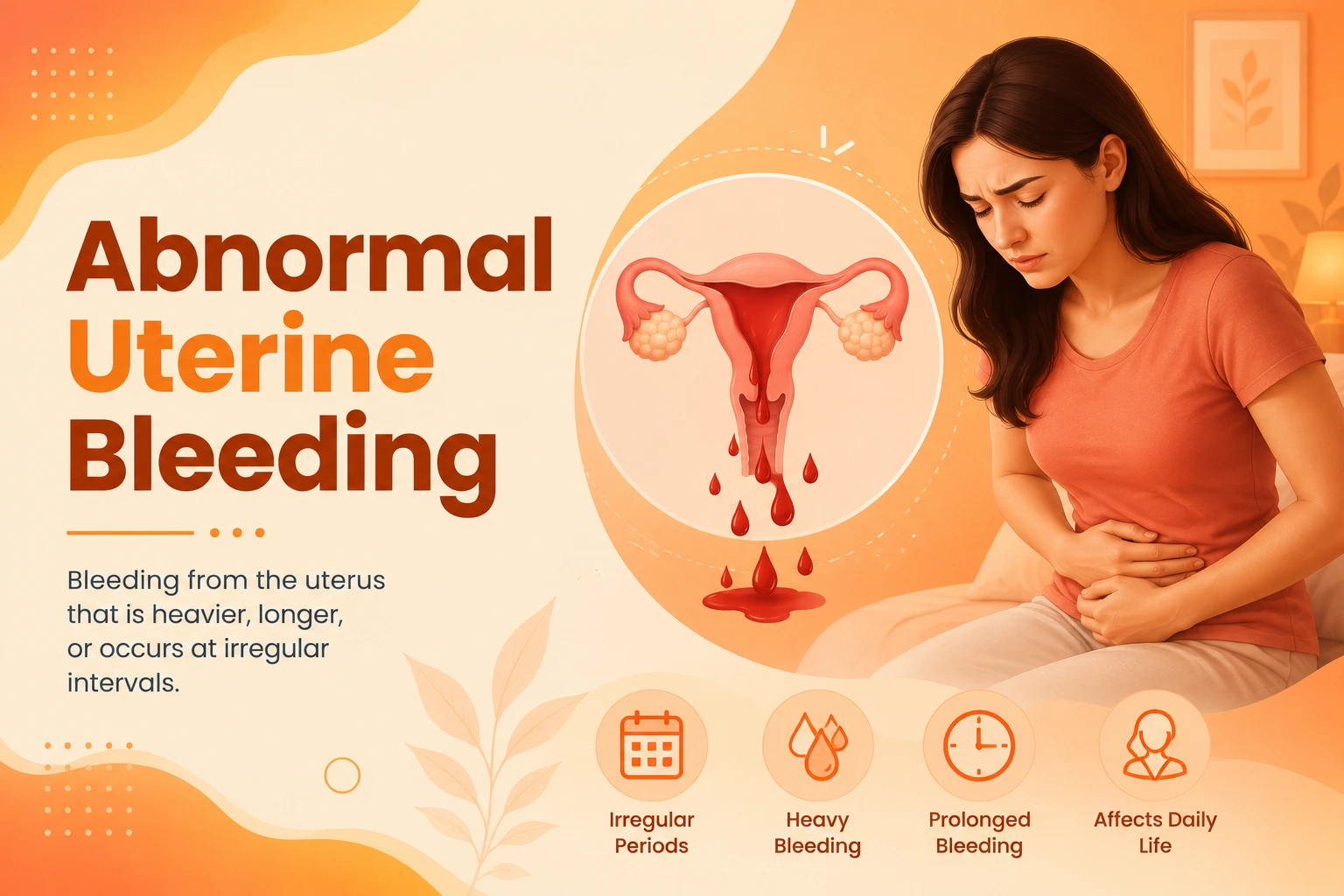
Heavy menstrual bleeding affects up to 30% of women during reproductive years, making abnormal uterine bleeding one of the most common gynecological concerns worldwide (source). Women in Delhi experiencing irregular periods, prolonged bleeding, bleeding between menstrual cycles, or unusually heavy menstrual flow should not ignore these symptoms.
Abnormal uterine bleeding (AUB) refers to bleeding that differs from a normal menstrual cycle in timing, duration, frequency, or volume. Some women experience periods lasting more than 7 days, while others may notice bleeding between periods or after menopause.
Women experiencing persistent or severe bleeding should consult an Obs and Gynae specialist in Delhi for evaluation. Early diagnosis helps identify the exact cause of abnormal uterine bleeding and allows timely treatment planning based on age, symptoms, medical history, and reproductive health goals.
Common Causes of Abnormal Uterine Bleeding
The PALM-COEIN classification divides abnormal uterine bleeding into structural and non-structural causes. Women in Delhi experiencing irregular menstrual cycles, heavy bleeding, or prolonged periods may develop AUB due to hormonal, uterine, or medical conditions.
Hormonal Imbalance and PCOS
Hormonal imbalance remains one of the most common causes of abnormal uterine bleeding in reproductive-age women. Irregular ovulation can disrupt the menstrual cycle and lead to unpredictable bleeding patterns.
Polycystic Ovary Syndrome (PCOS) frequently causes:
- Irregular periods
- Delayed menstrual cycles
- Heavy bleeding episodes
- Prolonged bleeding
Women with PCOS may also experience acne, weight changes, and excessive hair growth alongside menstrual irregularities.
Fibroids and Endometrial Polyps
Uterine fibroids and endometrial polyps are structural causes of abnormal uterine bleeding. Fibroids are non-cancerous growths inside or around the uterus that may increase menstrual bleeding volume and pelvic discomfort.
Endometrial polyps can cause:
- Bleeding between periods
- Heavy menstrual bleeding
- Spotting after intercourse
- Irregular menstrual cycles
Obs and Gynae specialists in Delhi often diagnose these conditions through pelvic ultrasound examination.
Thyroid Disorders and Medical Conditions
Thyroid disorders can affect menstrual hormone regulation and lead to abnormal bleeding patterns. Both hypothyroidism and hyperthyroidism may interfere with menstrual cycle frequency and duration.
Bleeding disorders, certain medications, infections, pregnancy-related complications, and endometrial abnormalities may also contribute to abnormal uterine bleeding.
Women experiencing repeated irregular bleeding should consult a gynaecologist in Rohini or Delhi for proper evaluation and diagnosis.
Hormonal and Structural Causes of AUB in Delhi Patients
The PALM-COEIN system classifies abnormal uterine bleeding into 9 categories, helping Obs and Gynae specialists identify the exact cause of irregular bleeding. The classification separates structural abnormalities from hormonal and non-structural conditions.
Structural Causes of Abnormal Uterine Bleeding
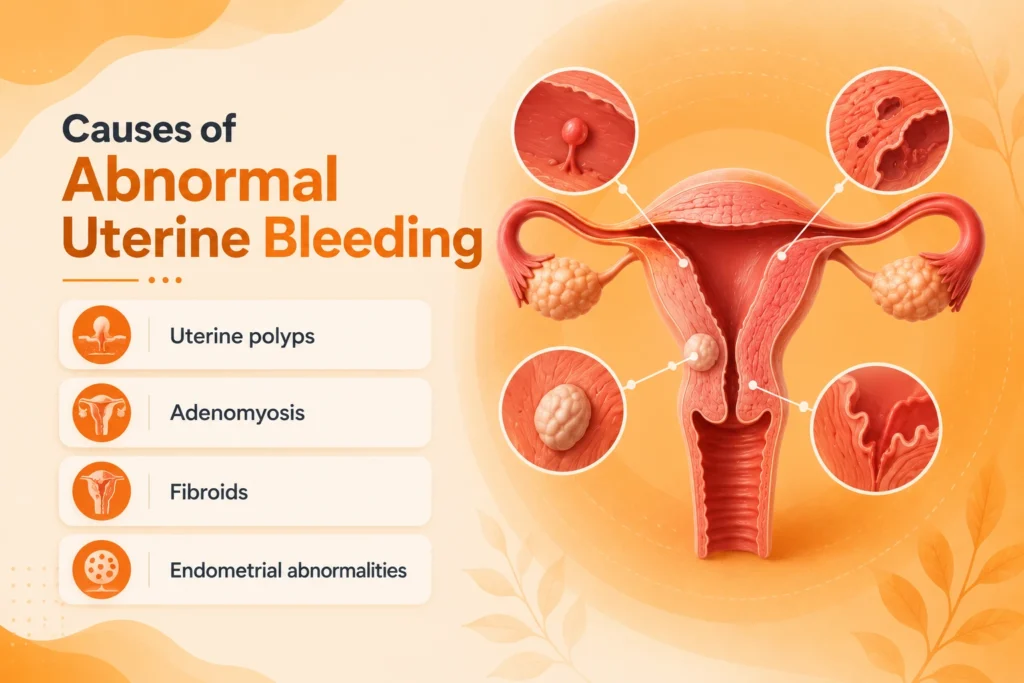
Structural causes affect the uterus directly and often require imaging tests such as pelvic ultrasound for diagnosis.
Common structural causes include:
- Uterine polyps
- Adenomyosis
- Fibroids
- Endometrial abnormalities
Fibroids remain one of the most common structural causes of heavy menstrual bleeding in women during reproductive years. Some women may also experience pelvic pressure, abdominal bloating, or painful periods alongside excessive bleeding.
Hormonal and Non-Structural Causes
Hormonal causes usually affect ovulation and menstrual cycle regulation. Women with irregular ovulation may experience unpredictable menstrual bleeding, skipped periods, or prolonged cycles.
Common non-structural causes include:
- Ovulatory dysfunction
- PCOS
- Thyroid disorders
- Bleeding disorders
- Medication-related bleeding
- Endometrial dysfunction
Adolescent girls and women approaching menopause often develop hormonal irregularities more frequently due to fluctuating hormone levels.
Age-Related AUB Patterns in Delhi Women
Women under 20 years commonly experience abnormal bleeding due to immature hormonal regulation and ovulation changes. Reproductive-age women more frequently develop PCOS, fibroids, pregnancy-related bleeding, or thyroid-related menstrual abnormalities.
Women above 45 years with persistent abnormal uterine bleeding may require additional evaluation to rule out endometrial abnormalities. Obs and Gynae specialists in Delhi may recommend ultrasound scans, hormonal testing, or endometrial biopsy depending on symptom severity and age.
When to Visit a Gynaecologist in Rohini for Uterine Bleeding
Bleeding lasting more than 7 days may require medical evaluation for abnormal uterine bleeding. Women experiencing persistent heavy bleeding, irregular periods, or bleeding between menstrual cycles should consult a gynaecologist in Rohini without delay.
Several symptoms may indicate the need for Obs and Gynae consultation:
- Heavy bleeding requiring frequent pad changes
- Passage of large blood clots
- Severe pelvic pain or cramping
- Bleeding after menopause
- Bleeding after intercourse
- Dizziness or fainting episodes
- Fatigue related to anemia
Diagnosis of Abnormal Uterine Bleeding by Obs and Gynae Specialists in Delhi
Women aged 45 years and older with abnormal uterine bleeding may require additional evaluation, including endometrial biopsy, to identify the underlying cause of bleeding (source). Obs and Gynae specialists in Rohini use a combination of clinical examination, imaging tests, and laboratory investigations to diagnose abnormal uterine bleeding accurately.
Medical History and Menstrual Assessment
The diagnostic process usually begins with detailed menstrual history evaluation. A gynaecologist may ask about:
- Menstrual cycle duration
- Bleeding frequency
- Number of pads used daily
- Presence of blood clots
- Pelvic pain or cramping
- Previous pregnancies
- Medication history
Women with PCOS, thyroid disorders, or previous uterine conditions may require additional hormonal evaluation.
Physical Examination and Pelvic Assessment
Obs and Gynae specialists in Delhi commonly perform pelvic examinations to assess uterine size, tenderness, cervical abnormalities, or signs of infection. Physical examination also helps identify anemia symptoms caused by prolonged heavy bleeding.
Women experiencing severe bleeding, abdominal pain, or pelvic pressure may require urgent evaluation to rule out fibroids, ovarian cysts, or pregnancy-related complications.
Blood Tests and Ultrasound Imaging
Blood investigations help identify anemia, hormonal imbalance, thyroid disorders, or clotting abnormalities contributing to abnormal uterine bleeding.
Common investigations include:
- Complete blood count (CBC)
- Thyroid function test
- Pregnancy test
- Hormonal profile
- Iron studies if anemia is suspected
Pelvic ultrasound remains one of the most commonly recommended imaging tests for abnormal uterine bleeding. Ultrasound scans help detect:
- Fibroids
- Endometrial polyps
- Adenomyosis
- Ovarian cysts
- Endometrial thickening
Endometrial Biopsy and Advanced Evaluation
Women above 45 years or patients with persistent abnormal bleeding may require endometrial biopsy to evaluate the uterine lining. Obs and Gynae specialists may also recommend hysteroscopy if ultrasound findings require further assessment.
Early diagnosis helps doctors in Delhi identify the exact cause of abnormal uterine bleeding and plan suitable medical or surgical treatment accordingly.
Treatment of Uterine Bleeding in Delhi
Heavy menstrual bleeding can lead to iron-deficiency anemia, fatigue, dizziness, and weakness if left untreated. Obs and Gynae specialists in Delhi plan abnormal uterine bleeding treatment based on the patient’s age, severity of bleeding, underlying cause, reproductive goals, and overall health condition.
Medical Treatment for Abnormal Uterine Bleeding
Women with mild to moderate abnormal uterine bleeding often receive medical treatment as the first step of management. Doctors may prescribe medicines to regulate menstrual bleeding, reduce blood loss, and correct hormonal imbalance.
Common medical treatment options include:
- Hormonal therapy
- Oral contraceptive pills
- Progesterone-based medicines
- Non-hormonal medications for heavy bleeding
- Iron supplementation for anemia
Women with PCOS-related bleeding may also require hormonal regulation and long-term menstrual cycle management.
Treatment for Structural Causes
Women diagnosed with fibroids, endometrial polyps, or adenomyosis may require procedural or surgical treatment depending on symptom severity and ultrasound findings.
Common procedures include:
- Hysteroscopy
- Dilation and Curettage (D&C)
- Polyp removal
- Fibroid treatment procedures
Obs and Gynae specialists in Rohini and Delhi may recommend minimally invasive procedures when medical treatment does not adequately control bleeding.
Surgical Treatment Options for Severe AUB
Women with severe recurrent bleeding, large fibroids, or persistent endometrial abnormalities may require advanced surgical treatment.
Surgical management may include:
- Endometrial ablation
- Fibroid surgery
- Hysterectomy in selected cases
Doctors usually consider surgery after evaluating age, fertility goals, response to medication, and severity of symptoms.
Abnormal uterine bleeding can occur due to hormonal imbalance, fibroids, PCOS, thyroid disorders, endometrial conditions, or other gynecological concerns. Women in Delhi experiencing heavy periods, irregular bleeding, prolonged menstrual cycles, or postmenopausal bleeding should seek timely evaluation to identify the underlying cause and begin appropriate treatment.
Early diagnosis through clinical examination, ultrasound, blood investigations, and gynecological assessment helps reduce complications such as anemia and persistent menstrual irregularities.
Women experiencing abnormal uterine bleeding can consult the Obs and Gynae specialists at Manasvi Healthcare for evaluation and treatment planning. The clinic provides assessment for heavy menstrual bleeding, irregular periods, fibroids, PCOS-related bleeding, and other gynecological concerns.