
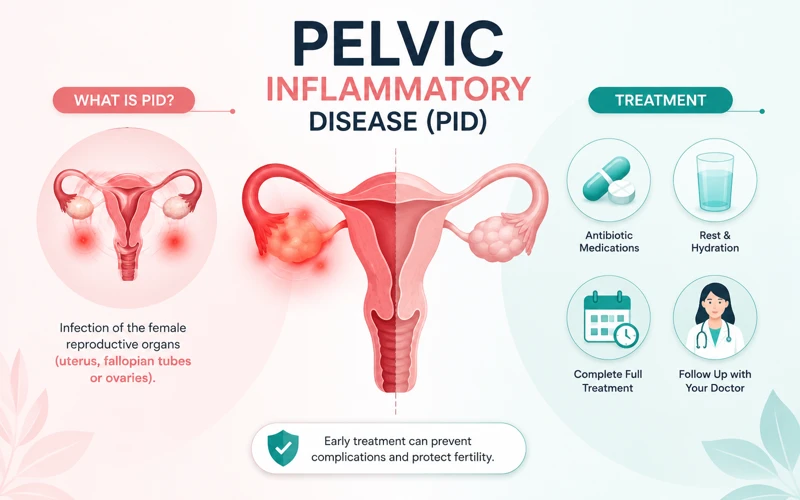
Pelvic Inflammatory Disease (PID) affects around 1 in 8 women with untreated sexually transmitted infections as per studies. It refers to infection and inflammation of the female upper reproductive tract, including the uterus, fallopian tubes, and ovaries.
According to a gynaecology specialist in Delhi, PID is commonly linked to untreated bacterial infections such as Chlamydia trachomatis and Neisseria gonorrhoeae. The condition often progresses silently in early stages, which leads to delayed diagnosis in obs and gynae clinics in Rohini and Delhi.
Patients typically present with lower abdominal pain, abnormal vaginal discharge, fever, or pain during intercourse. In many cases, symptoms are mild at first, but increases the risk of complications.
Medical guidelines indicate that PID requires antibiotic therapy, even if symptoms improve early. Without timely gynecologist intervention in clinics or hospitals, infection spread upward and cause long-term reproductive damage.
Pelvic Inflammatory Disease Causes in Patients
PID develops when bacteria travel from the vagina and cervix into the uterus, fallopian tubes, or ovaries. The most common infectious causes include Chlamydia trachomatis and Neisseria gonorrhoeae, both of which are frequently associated with sexually transmitted infections in urban populations.
In patients, delayed testing for STIs increases infection progression from lower genital tract to upper reproductive organs. Unprotected sexual activity remains a key contributing factor seen in gynecology clinics across Rohini and other Delhi regions.
Post-procedural infection contribute in some cases. These include infections following uterine procedures, abortion care, or intrauterine device insertion when sterile protocols are not strictly followed.
In a smaller number of cases, normal vaginal bacteria may also ascend into the reproductive tract after disruption of cervical barriers, leading to acute pelvic inflammatory disease requiring prompt antibiotic treatment under a gynecologist in Delhi.
Pelvic Inflammatory Disease Symptoms in Women
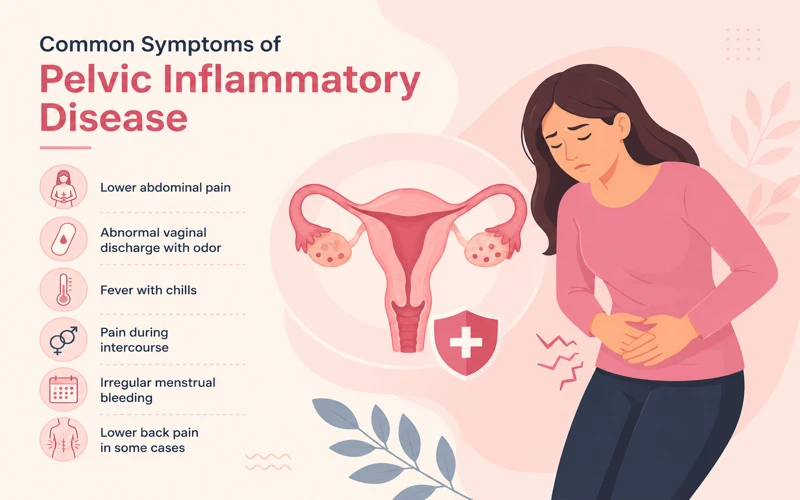
Pelvic pain occurs in most symptomatic PID cases, affecting lower abdomen and pelvic region. In Delhi gynecology outpatient settings, symptoms often present in varying intensity, leading to delayed consultation in early stages.
Common Symptoms of Pelvic Inflammatory Disease
- Lower abdominal pain
- Abnormal vaginal discharge with odor
- Fever with chills
- Pain during intercourse
- Irregular menstrual bleeding
- Lower back pain in some cases
Many patients visiting gynecologists in Delhi or Rohini report mild symptoms initially, especially intermittent pelvic discomfort. This leads to delayed diagnosis until infection progresses to upper reproductive organs.
In evaluation, fever combined with pelvic pain is considered a strong indicator of active infection requiring immediate antibiotic therapy. Vaginal discharge changes are often the earliest observable sign but are frequently ignored by patients.
When to Visit a Gynaecologist in Rohini, Delhi?
Around 10–20% of pelvic inflammatory disease cases require hospital-based treatment due to severity. This makes early gynecologist consultation in Delhi essential when symptoms begin.
Warning Symptoms Requiring Visit to a Gynae
- Persistent lower abdominal pain beyond 48 hours
- Fever with vaginal discharge
- Pain during urination or intercourse
- Irregular or heavy vaginal bleeding
- Nausea or systemic weakness with pelvic pain
Clinical pelvic examination is recommended as the first diagnostic step in suspected PID cases.
Patient History Evaluation
The gynecologist begins with detailed history-taking, including:
- Onset and duration of pelvic pain
- Menstrual cycle irregularities
- Vaginal discharge characteristics
- Sexual history and STI risk assessment
- Previous infections or procedures
Physical and Pelvic Examination
Pelvic tenderness and cervical motion pain are key clinical indicators of PID. A gynecologist performs a gentle internal examination to assess uterine and adnexal tenderness.
Obs & Gyne Medical Tests in Delhi Clinics for PID
- Vaginal or cervical swab testing for bacterial infection
- Blood tests to detect elevated inflammatory markers
- Urine tests to rule out urinary tract infection
- STI screening for Chlamydia and Gonorrhea
Imaging and Diagnostic Support
Ultrasound imaging in Delhi diagnostic centers is commonly used to detect:
- Fluid accumulation in fallopian tubes
- Pelvic abscess formation
- Uterine or ovarian inflammation
Pelvic Inflammatory Disease Treatment Antibiotics in Delhi
Standard PID treatment requires a minimum of 10–14 days of antibiotics even if symptoms improve early . In Delhi gynecology practice, treatment is selected based on infection severity and outpatient or hospital setting.
Gynecologists prescribe broad-spectrum antibiotic combinations to cover multiple bacterial causes, mainly targeting sexually transmitted organisms like Chlamydia and Gonorrhea.
Pelvic Inflammatory Disease Treatment in Rohini, Delhi
- Oral antibiotics for mild to moderate PID
- Intravenous (IV) antibiotics for severe infection or hospital cases
- Combination therapy to cover mixed bacterial infections
Acute Pelvic Inflammatory Disease Treatment & Management
Around 10–20% of PID cases require hospital admission for intravenous antibiotic therapy, according to CDC clinical guidance . In Delhi gynecology emergency settings, acute cases are managed based on infection severity and systemic involvement.
Gynecologists in Delhi and Rohini recommend admission when patients present with:
- High-grade fever with pelvic pain
- Severe abdominal tenderness
- Persistent vomiting or inability to tolerate oral medication
- Suspected pelvic abscess
- Poor response to initial oral antibiotics
Intravenous Antibiotic Therapy
IV antibiotics are initiated immediately in acute PID to control systemic infection. Treatment targets mixed bacterial infection and prevents progression to reproductive tract damage.
Pain and Symptom Control
Management includes:
- Analgesics for severe pelvic pain
- Antipyretics for fever control
- IV fluids for hydration support
- Bed rest during acute phase
Monitoring in Hospital Settings
Patients admitted in Delhi hospitals are monitored for:
- Reduction in fever within 48–72 hours
- Decrease in pelvic tenderness
- Response to intravenous antibiotics
- Signs of abscess formation or complications
Complications of Untreated PID in Patients
About 1 in 8 women with a history of PID develop difficulty conceiving due to fallopian tube damage, according to CDC clinical data. In Delhi gynecology practice, delayed treatment significantly increases the risk of long-term reproductive complications.
Infertility Risk
Untreated pelvic inflammatory disease can cause scarring of the fallopian tubes, blocking egg movement and reducing fertility. This is one of the most serious long-term outcomes seen in delayed cases across Delhi clinics.
Ectopic Pregnancy Risk
PID increases ectopic pregnancy risk by 6–10 times, where the embryo implants outside the uterus, usually in the fallopian tube. This is a medical emergency requiring immediate hospital care.
Chronic Pelvic Pain
Around 1 in 5 women may develop long-term pelvic pain after PID infection, as reported by NHS guidance. This pain may persist for months or years after infection.
Tubal and Reproductive Damage
Repeated or severe infections can permanently damage reproductive organs, leading to:
- Blocked fallopian tubes
- Reduced ovarian function impact
- Increased miscarriage risk
Prevention of Pelvic Inflammatory Disease
Consistent safe sexual practices significantly reduce PID risk, as most cases are linked to sexually transmitted infections. In Delhi’s gynaecology practice, prevention focuses on early screening and behavioral risk reduction.
Safe Sexual Practices
- Use barrier protection methods during intercourse
- Avoid multiple untreated sexual partners
- Ensure partner STI testing when infection is suspected
Regular STI Screening in Delhi Clinics
Early detection of Chlamydia and Gonorrhea reduces progression to PID. Gynecologists in Delhi recommend periodic STI screening for at-risk individuals, especially those with recurrent symptoms.
Early Gynecologist Consultation
Delaying treatment increases risk of upper reproductive tract infection. Early consultation in Delhi or Rohini clinics helps initiate antibiotics before complications develop.
Post-Procedure Infection Prevention
PID risk increases after uterine procedures if hygiene protocols are not followed. In Delhi clinical settings, sterile technique and follow-up monitoring reduce infection probability.
Patient Hygiene and Awareness
- Maintain genital hygiene
- Avoid self-medication for vaginal infections
- Report abnormal discharge or pain early
Pelvic Inflammatory Disease can lead to infertility. In Delhi gynecology practice, early diagnosis and timely antibiotic treatment remain the most effective ways to prevent long-term reproductive damage.
PID often begins with mild symptoms such as pelvic discomfort or abnormal discharge, but can quickly progress to severe infection involving the uterus and fallopian tubes. Without timely intervention, complications such as ectopic pregnancy and chronic pelvic pain may occur. Patients experiencing persistent pelvic pain, fever, or unusual vaginal discharge should not delay medical evaluation. Early consultation with a qualified gynecologist in Delhi or Rohini ensures:
At Manasvi Healthcare, patients receive structured evaluation and treatment for pelvic inflammatory disease under specialist supervision. The clinic focuses on: If you are experiencing symptoms of PID or related reproductive health concerns, early medical care is essential.
Visit Manasvi Healthcare, Delhi, for expert gynecological consultation and timely treatment of Pelvic Inflammatory Disease.