
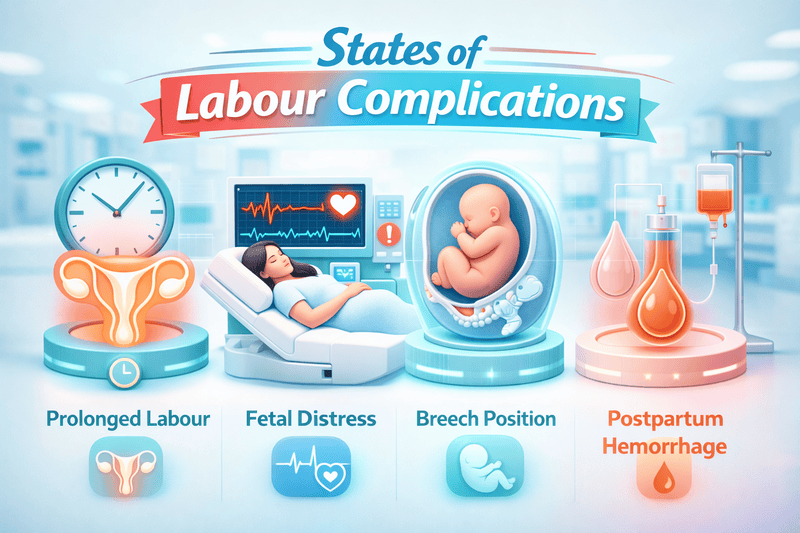
As your due date comes closer, labour is probably on your mind more than anything else. You imagine the pain, the waiting, and the moment you finally hold your baby. What most people do not talk about enough is that labour does not always move smoothly from start to finish. Sometimes, the body needs help. Sometimes, labour slows down. Sometimes, unexpected challenges appear.
Knowing about the stages of labour complications does not make birth frightening. It makes you prepared. When you understand what can go wrong and how doctors manage it, fear reduces. Confidence grows. This article by Obstetrics in Delhi explains labour complications in clear language, so you know what to expect and when medical support becomes essential.
What is Labour in Pregnant women?
Labour happens in stages. Each stage has its own role in bringing your baby into the world. When one stage does not progress as expected, complications during labour can occur.
Obstetrics in Rohini, and Obs and gynae doctors divide labour into three main stages. Problems can develop in any of them. The good news is that most complications are manageable when identified early in a well-equipped hospital setting.
First stage of labour and the problems that may arise
The first stage begins when contractions start and ends when your cervix is fully open. This stage can last several hours, especially for first-time mothers.
Slow or prolonged cervical dilation
Sometimes, contractions do not open the cervix at the expected pace. This leads to prolonged labour pain and physical exhaustion. You may feel strong contractions without enough progress, which can be emotionally draining.
Gynaecology and Obstetrics Doctors monitor contraction strength, cervical change, and your energy levels. Medications, hydration, or controlled pain relief may help labour move forward.
Weak or irregular contractions.
Your uterus may contract but not effectively. This slows labour and increases discomfort. Obs & Gynae support helps regulate contractions and protect both you and your baby
Second stage of labour and related complications
The second stage begins when the cervix is fully dilated and ends with the baby’s birth. This is the pushing stage.
Difficulty in pushing effectively
Pushing can be hard if you’re tired in a bad position or your muscles aren’t working together well. Long periods of pushing put more stress on both the mother and the baby
Obstetricians help with breathing, posture and timing to make things work better. When necessary, assisted delivery may be an option
Baby’s position causing delay
Sometimes the baby is not aligned properly in the birth canal. This can slow descent and increase pain. Skilled handling and timely decisions are crucial at this point
Third stage of labour and possible risks
The third stage involves delivery of the placenta. Though usually quick, complications can still occur.
Retained placenta
If the placenta does not come out completely, it can cause bleeding and infection. Doctors intervene carefully to prevent further risk.
Excessive bleeding after delivery
Post-delivery bleeding requires immediate attention. A prepared obstetric team manages this with medication and close monitoring.
Risk factors that increase labour complications
Certain conditions make complications more likely. You may have a higher risk if this is your first pregnancy, if you have multiple babies, or if you have conditions like high blood pressure or diabetes. Risks also include miscarriage.
Age, previous surgeries, and bone structure also play a role. This is why regular antenatal visits at a Gynecology clinic in Rohini are so important.
Signs during labour that require immediate attention
You should never ignore signs that something is wrong. If you have persistent pain that doesn’t get better, abnormal bleeding, a fever, or sudden weakness, you need to see a obs & gynae right away.
Changes in your baby’s heart rate are another important sign. This is why you shouldn’t have a baby at home without a doctor there. You should go to a good Obs and Gynae hospital in Delhi instead.
How doctors manage labour complications safely?
Modern obstetrics is all about finding problems early and fixing them quickly. Doctors are always checking the baby’s position, the mother’s strength, and the pattern of contractions
Pain relief tools to help with delivery or surgery are not chosen every time. A skilled Obs and Gynaecology doctor in Rohini makes choices based on safety not speed
When surgical C-Section delivery in Rohini becomes necessary
Sometimes, natural labour is no longer the safest option. A caesarean section may be recommended to protect the baby or the mother.
People never take this decision lightly. It is based on medical need not ease. Access to advanced obstetrics in Delhi makes sure that surgery is safe and well-organized when it is needed
Emotional support during complicated labour
Labour complications are not just physical. They can be emotionally overwhelming. Reassurance, explanation and support from the medical team matter deeply.
Feeling heard and understood helps you stay calm and cooperative during difficult moments
Recovery after complicated labour
Recovery may take longer if labour was prolonged or assisted. Rest, follow-up visits, and proper nutrition help healing.
Your doctor monitors bleeding, pain levels, and emotional well-being after delivery. Honest communication during follow-up visits ensures smooth recovery.
Work is unpredictable, but getting ready for it makes a big difference. When you know what can go wrong during labor you can face childbirth with confidence instead of fear. The right hospital, the right doctor and making decisions on time will keep you and your baby safe
Manasvi Healthcare has trusted obstetric services that put the patient first. If you want caring, experienced maternity care look no further. Our team makes sure that you and your baby get the care you need at every stage by focusing on safety, openness and support
Frequently Asked Questions.
Are labour complications common?
Many women experience minor delays or challenges. Serious complications are less common when care is timely.
Can prolonged labour harm the baby?
When monitored properly, risks are minimized. Doctors act early to protect the baby.
Is pain always worse during complicated labour?
Pain perception varies. Pain relief options help manage discomfort effectively.
Can labour complications be predicted?
Some risks are known in advance, but many develop during labour itself.
Does complicated labour affect future pregnancies?
Not always. Your doctor advise according to your experience