
Not every pregnancy symptom announces itself clearly. Some arrive quietly, settle in, and leave women unsure whether what they’re feeling is normal or something to worry about. Difficulty breathing is one of those experiences. Many women notice it while climbing stairs. Others feel it when lying flat. Some wake up at night feeling they need to take deeper breaths.
Medical data suggests that more than half of pregnant women experience some degree of breathlessness, even without any underlying lung or heart disease. For most, it is not dangerous. But the sensation itself can be unsettling, especially when it appears early or worsens suddenly.
A breathing problem during pregnancy rarely starts with pain. It usually begins with awareness. A woman becomes conscious of her breathing in a way she never was before. That awareness alone can create anxiety, which then makes the symptom feel stronger.
What Changes Inside the Body During Pregnancy
Pregnancy changes how almost every system in the body functions, including the lungs and heart. These changes are not random. They happen because the body is adapting to support another life.
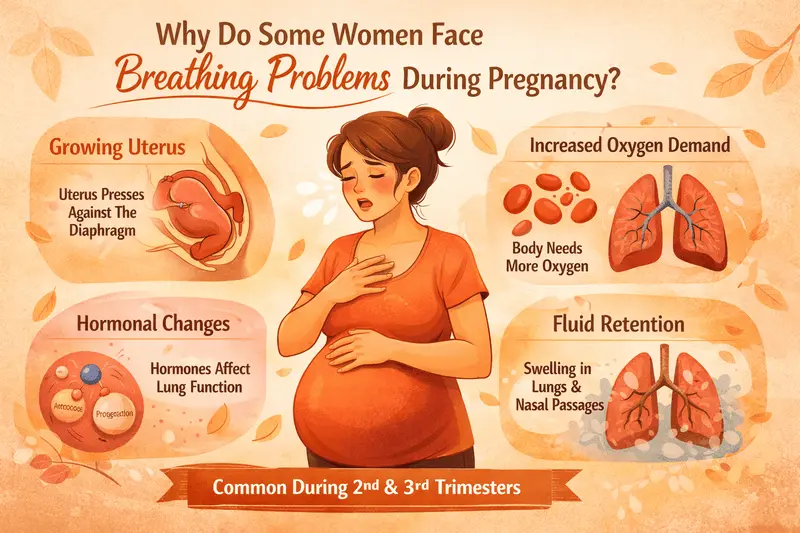
One of the earliest changes involves hormones. Progesterone rises sharply soon after conception. This hormone affects the brain’s breathing center, subtly increasing the depth of each breath. Oxygen intake improves, which benefits the baby. But to the woman, it can feel like breathing suddenly requires effort. This is one reason a breathing problem in early pregnancy can occur even before the abdomen begins to grow.
Blood volume also increases significantly. The heart pumps more blood with each beat. The lungs work harder to oxygenate that blood. None of this is visible, but the body feels it.
Later in pregnancy, physical space becomes an issue. As the uterus expands, it pushes upward against the diaphragm. The lungs no longer have the same room to expand fully. This doesn’t mean oxygen levels are low. It simply means breathing feels different.
This combination of hormonal stimulation and physical pressure explains why a breathing problem in pregnancy can occur in women who are otherwise healthy.
When Breathlessness in Pregnancy Is Considered Normal?
Normal pregnancy-related breathlessness tends to be steady rather than dramatic. It doesn’t usually appear suddenly or worsen rapidly. Many women notice it during activity, when bending forward, or while lying flat on their back.
Importantly, normal breathlessness does not come with chest pain, fainting, bluish lips, or palpitations. A woman may feel uncomfortable, but she can still speak in full sentences.
Doctors see this pattern often, which is why reassurance is commonly given during routine antenatal visits. A skilled Gynaecologist in Delhi will usually assess posture, hemoglobin levels, blood pressure, and heart rate before deciding whether further tests are needed.
When Breathing Problem Symptoms in pregnancy times Should Not Be Ignored
Not every breathing issue should be brushed aside. Certain breathing problems symptoms suggest that something more than normal pregnancy changes may be involved.
Sudden onset breathlessness, pain in the chest, dizziness, or difficulty breathing at rest are warning signs. Severe anemia, asthma, lung infections, heart conditions, and pregnancy-related complications such as preeclampsia can all affect breathing.
Emotional Impact of Breathing Difficulty
Breathing is automatic. When it becomes noticeable, it can feel frightening. Many women describe a sense of vulnerability when they realize they cannot control the sensation easily. This emotional response is rarely discussed, but it is real.
Fear can intensify physical symptoms. Anxiety tightens chest muscles. This makes breathing feel even harder. This cycle can continue unless someone explains what is happening calmly and clearly.
A Best gynaecologist in Delhi doesn’t just look at reports. They listen. Reassurance, when appropriate, can reduce symptoms more effectively than medication.
Does Maternal Breathing Affect the Baby?
In most pregnancies, mild breathlessness does not harm the baby. Oxygen levels remain adequate. The placenta continues to function normally.
Certain maternal conditions associated with respiratory difficulties may affect outcomes. Poorly managed asthma, severe anemia or sleep-related breathing disorders during pregnancy have been linked to increased risks of complications
After birth some babies experience newborn breathing problems particularly if they are born early or via emergency delivery. These issues usually resolve with proper neonatal care. A newborn baby breathing problem is rarely caused by a mother’s normal pregnancy breathlessness alone.
Still, good antenatal monitoring helps reduce risk.
Care During Pregnancy Makes a Difference | Obs & Gynae in Rohini Delhi
Regular follow-ups with an Obs & gynae in Rohini Delhi allow doctors to track changes gradually rather than reacting during emergencies. Small issues are often identified early through routine questioning rather than tests
Clinics that focus on continuity of care such as a dedicated Obs and gynae clinic in Delhi, often manage these concerns better because they know the patient’s baseline health
Women in North Delhi often prefer care closer to home. Facilities like an Obs & Gynae Clinic in Rohini provide accessible monitoring which reduces anxiety and improves compliance with follow-ups
Lifestyle Adjustments That Help
Some changes are easy to make and work well. Standing up straight instead of slouching makes your lungs expand better. When you sleep with your upper body slightly raised, it puts less pressure on your diaphragm. Taking breaks while working out stops you from overdoing it
Anemia is common during pregnancy and can make it hard to breathe so iron levels should be checked. Best obstetrics in Rohini makes sure that mother’s comfort and the baby’s health are top priorities
Does Breathing Return to Normal After Child Delivery in Delhi?
Most women find that their breathing gets back to normal after giving birth. As hormone levels drop and the uterus gets smaller, the pressure on the diaphragm goes down. The feeling of not being able to breathe goes away over weeks not days
If breathing problems don’t go away after delivery you may need to see a doctor again. You should never ignore symptoms that don’t go away
Breathing difficulty during pregnancy is common, but it should never be dismissed without understanding its cause. The body is adapting, working harder, and adjusting constantly. Most of the time, this process is safe. Occasionally it needs guidance
The key lies in informed care, careful listening, and timely medical support. Mansavi Healthcare focuses on precisely this balance treating pregnancy as a natural process while remaining alert to signs that require attention
Pregnancy does not demand perfection from the body. It demands awareness. And when that awareness is supported by the right medical care, even unsettling symptoms become manageable.